Ahmad Naous
Reaction score
0

Blog Latest activity Posts About

  • Professor Ahmad Naous: Stratexology: A New Science for Creating Shared Value And Positive Impact

    1577945947069.jpeg

    0


    Professor Ahmad Naos is an international speaker, Balanced Scorecard consultant and management educator, who helps managers and organizations learn from their past, understand the present and create their future. As an (Execution premium Community) practitioner, he has a unique experience in measuring performance. He spent 15 years working in corporations in Middle East. He extracted from his experience highly innovative ideas about "The Science of Strategy Execution", Balanced Scorecard, and The Execution Premium. He has spent a decade honing his thinking as a consultant and Chief Human Resources Officer. He communicates ideas to audiences around the world in the form of creative presentations, in-depth seminars, and management development programs. In his book "The Science of Strategy Execution" it offers an extraordinary integration of management and practice from a strategy management perspective. Its objective is to help readers make meaning from the Balanced Scorecard and Execution premium. The result is an inspirational practice of the Balanced Scorecard and the Execution Premium that will resonate with every reader's experience.

    The science of strategy execution or Stratexology is a new economic science that was discovered in 2017 after 15 years of research. The core of science is execution. 90% of companies fail to execute strategy, only 10% do it.

    After 15 years of research Professor Ahmad Naous was able to develop two theories of Harvard Business School Professors Dr. Robert Kaplan and David Norton to a new science, Stratexology. It was not an easy task.

    The purpose of Stratexology is not to achieve profits only but to create shared value and positive Impact in societies and communities.

    The Balanced Scorecard is a management tool to measure performance of companies to make sure that it is achieving their objectives. It was developed in 1990 by Dr. Robert Kaplan and his cohort Dr. David Norton of Harvard Business School.

    The BSC was elected as best tool to measure performance in the last 75 years.

    FMM: Stratexology: Creating Shared Value and Positive Impact is no longer a management perspective. It is an economic science. Explain

    Stratexology is a new science from two words… Strategy and Execution(X). The core of the science is execution. Without execution, strategy is meaningless. It is a road without direction. Stratexology is the science of strategy execution. It is not anymore, a management perspective. It is now an economic science to create shared value and positive impact in communities and societies.

    Robert Kaplan and David Norton put a management tool, but Professor Ahmad J. Naous and his knowledge in economics turned Balanced Scorecard to an economic tool and put it on direction of creating shared value and positive impact in communities and societies.

    FMM: It's been more than 25 years since Harvard Business School professor Dr. Robert S. Kaplan and cohort David P. Norton put forth the concept and research of the Balanced Scorecard. What has changed since then?


    After 30 years there is a new economic science that companies can use worldwide to create shared value and positive impact. It is kind of new concept to help not well known communities and societies to rise and speak widely about their problems and concerns. Stratexology is concerned also with humanitarian issues to help less fortunate people to get their chance in life.

    The objective is to create shared value and positive Impact in poor communities and societies.

    1617484135712.jpeg

    FMM: What is positive impact?

    The world is facing seemingly impossible challenges that impact businesses, societies, economies, and lives. That's why we measure company's success not only in revenues and profit and shareholder value, but in Impact-because you can't have one without the other, at least not sustainably. This is also why we coined the term "Positive Impact" to mean "the intentional creation of enduring social and economic value", and we aspire to realize it in everything we do.

    FMM: Tell us about the Positive Impact Framework.

    The Positive Impact Framework is a new way to build, execute and measure your organization's strategy. Designed with the collaboration of multi-stakeholder alliances in mind including corporations, communities, investors and more, the positive Impact will help organizations formulate strategies and implement solutions that generate benefits for communities, corporations, and the environment.

    LIFE will facilitate growth of the microfinance sector in Lebanon.

    FMM: You were honored with the Humanitarian Global Goodwill Ambassador award by Richard Dipilla of GGA. What does this mean to you?

    The honorment was for the great humanitarian work I did in Lebanon and helping Syrian refugees. You can say it is part of Stratexology agenda to create shared value and positive impact.

    It is the practical part of science of strategy execution. Mr.Richard Dipilla was the first supporter and after big engagement. I was appointed Director of Lebanon and then Chairman of Lebanon.

    It means life to me. You have to help not to sit and watch things but engage to solve world challenges.

    IMG_6625-724x1024.jpeg

    FMM: What are trends that you are seeing today as a consultant?

    As a BSC Consultant or SSE Consultant now, I am helping people through spreading knowledge. Ignorance is a disease and we must fight it through knowledge. When I discovered Stratexology the main task to promote knowledge. When you tackle the ignorance, the only result you get is knowledge.

    On September 30, 2016, Palladium, and the United States Agency for International Development (USAID) signed a 5 year, $20.3 million contract to support the Livelihoods and Inclusive Finance Expansion (LIFE) Project in Lebanon.

    The LIFE project will link vulnerable entrepreneurs at the bottom of the economic pyramid with business training and financial services, improving livelihoods, creating jobs, and reducing poverty while facilitating growth and consolidation of the microfinance sector in Lebanon. LIFE will focus on all regions and rural areas of Lebanon with a special emphasis on "host communities" where large numbers of Syrian refugees are located.

    The LIFE project builds on USAID's previous investments towards growth of the Lebanese microfinance industry, most recently with the Lebanese Investment in Microfinance (LIM) project. Under LIFE, Palladium will provide world-class technical assistance, training, and strategic guidance to microfinance institutions in Lebanon and Lebanon's Microfinance Association (LMA) so these actors can continue to grow their services to best meet the needs of Lebanon's most vulnerable entrepreneurs. LIFE will concurrently build the capacity of Lebanon's smallest and most vulnerable entrepreneurs so that they can grow in business acumen and financial capability, building a new generation of entrepreneurs in Lebanon. LIFE will support local actors as they institute policy changes that will transform the microfinance ecosystem in Lebanon and enable greater inclusivity.

    Specifically, LIFE aims to increase capitalization of microfinance institutions (MFIs) who are members of the LMA by at least 25%, expand the coverage of MFIs into formerly underbanked areas, increase the number and value of loans provided by MFIs, provide training to 5,000 microentrepreneurs, and increase the incomes of women, youth and disadvantaged individuals by 20% over project life. LIFE will also institute an innovative grant fund that will remunerate Lebanese-based actors upon successful performance in identifying new entrepreneurs, providing them with business training, and ultimately preparing them to become viable microfinance clients.

    Palladium has mobilized a best in class team of local and international partners to support LIFE. LIFE will maintain an office in Beirut, with field agents operating in Lebanon's North, South, and Bekaa Valley.

    Said Santiago Sedaca, Palladium Vice President for Economic Growth, "The LIFE project offers a unique opportunity to address the supply, demand, and enabling environment aspects of Lebanon's microfinance industry simultaneously. We couldn't be more pleased to be part of this exciting effort to help more Lebanese entrepreneurs increase their incomes and ability to access formal finance, and work with Lebanon's capable institutions to usher in a new era in Lebanon's financial sector evolution."

    This is where ground-breaking impact starts!!!

    FMM: Tell us about your upcoming speaking engagements.


    As for speaking engagements, It will start in 2022. I am trying to speak at Harvard Business School, London School of Economics, and Noble in Sweden. It may take time, but what is meant to be it will be with the blessing of Allah.

    https://www.linkedin.com/in/ahmad-j-naous

    Tags: Balanced Scorecard, Balanced Scorecard Consultant, David Norton, Dr. Robert Kaplan, GGA, Global Goodwill Ambassador Award, Harvard University, humanitarian, Jules Lavallee, Jules Lavallee International Journalist, Positive Impact, Professor Ahmad Naous, Stratexology, The Science of Strategy Execution

    A Value Creation Economist specializes in identifying, measuring, and maximizing the economic value generated by businesses, investments, or public policies. They bridge traditional microeconomics and corporate strategy by focusing on how to grow total value rather than just capturing existing market share.

    Key Focus Areas

    • Value-Based Pricing: Advising on how to price products and services based on the tangible benefits they provide to the customer, rather than just the cost of production.
    • Resource Optimization: Allocating capital, labor, and intellectual property to maximize return on investment (ROI) and minimize operational waste.
    • Strategic Growth: Evaluating mergers, acquisitions, a Evaluating mergers, acquisitions, and new product development to ensure they drive long-term enterprise value.


    Popular Frameworks & Metrics


    Value creation economists rely on specific metrics and theories to quantify growth:

    • Economic Value Added (EVA): A measure of a company's financial performance based on the residual wealth calculated by deducting the cost of capital from its operating profit.
    • Stakeholder Capitalism: Designing value delivery models that benefit a wider network, including customers, employees, and society, rather than focusing solely on short-term shareholder returns.
    • Input-Output Models: Assessing how an organization transforms raw inputs (people, technology, capital) into outputs that drive measurable benefits
    Where They Work

    Professionals in this role operate across a variety of sectors to steer economic strategy:

    • Management Consulting: Advising corporate leadership on restructuring, pricing, and scaling operations for growth.
    • Private Equity: Analyzing portfolio companies to implement efficiency measures, digital transformations, and scale value prior to exit.
    • Public Policy & Think Tanks: Evaluating the broader socio-economic value generated by public infrastructure or regulatory changes1617616224947.webp

    ahmad-j-naous.webp
    Professor Ahmad J. Naous is a distinguished Lebanese economist, strategic advisor, and educator renowned for pioneering Stratexology, an innovative framework that aligns strategic planning and execution to create shared value for all stakeholders. With over 20 years of experience, he has consulted CEOs, governments, NGOs, and multinational corporations—guiding them in implementing balanced, impact-driven strategies and humanitarian initiatives. A thought leader and author, he has published articles in top platforms and spoken globally on strategy execution and shared value creation. Professor Naous is also an advocate for refugee rights, applying his strategic frameworks to uplift displaced communities. Holding advanced academic credentials, he lectures at leading universities and serves in senior academic and advisory roles, blending economic insight with execution-centric leadership. His work bridges theory and practice, enabling organizations to drive sustainable growth, social impact, and resilience in complex environments.

    Attachments

    • ahmad-j-naous.webp
      ahmad-j-naous.webp
      68 KB · Views: 1
    The transition from the Balanced Scorecard to Stratexology(Economic Science) represents an evolution from internal performance management to external value creation. While the Balanced Scorecard revolutionized the 1990s by supplementing financial data with customer, process, and learning perspectives, it remained largely focused on how these factors improved the organization's own health and profitability. Stratexology expands this scope significantly, shifting the focus toward measuring impact—the tangible, long-term consequences an organization has on the economy, society, the environment, and human health. By moving beyond "what we do" to "what changes because of what we do," Stratexology ensures that strategy is defined not just by corporate success, but by a meaningful and sustainable legacy.

    Enjoy measuring Impact...

    Attachments

    • Impact 1.webp
      Impact 1.webp
      66.1 KB · Views: 1
    With blessing of Allah... the Greatest...

    This book is dedicated to the unsung heroes of organizational health: the leaders who dare to look beyond the surface, to diagnose with precision, and to intervene with care. It is for those who understand that an organization is not merely a collection of assets and processes, but a complex, living entity with a vital pulse. To the mentors who have guided, the colleagues who have collaborated, and the teams who have embraced change with resilience, this work is offered. May it serve as a testament to the profound impact of thoughtful, data-driven, and empathetic leadership in fostering enduring organizational vitality and success. It is a tribute to the continuous pursuit of excellence, the courage to confront challenges head-on, and the unwavering commitment to cultivating environments where both the organization and its people can thrive and achieve their fullest potential.

    Attachments

    • image_20251231_153906530cfc80-c965-4730-ae68-9115c48dbbdf.webp
      image_20251231_153906530cfc80-c965-4730-ae68-9115c48dbbdf.webp
      50.3 KB · Views: 1
    Screenshot 2025-10-18 133240.webp

    Every great transformation begins with courageous vision…

    …and the wisdom to navigate the chaos it unleashes. In Stratexology, we explore how bold ideas — rooted in deep ecological awareness and adaptive strategy — can reshape industries, societies, and even our planet. From the boardroom battles of corporate giants to the quiet revolutions in sustainable innovation, this book dissects the art of turning vision into reality. Drawing on real-world case studies, psychological insights, and cutting-edge frameworks, we'll uncover why some visions ignite wildfires of change while others flicker out. Whether you're a leader, entrepreneur, or dreamer, Stratexology equips you with the tools to cultivate courage, anticipate disruptions, and build resilient futures. Because transformation isn't just about seeing the path — it's about forging it, one strategic step at a time.AQOCUVPWS1vFHU_TqxDBAQQckoMsCjnpJvBCcSQKyD43dJHifQR6Oh_FbyRcEVA8cggXDBocEoe3BvQlzgxXUPDQ8b5nw...webp
    The Organization Surgeon: A Study of Corporate Anatomy

    In the contemporary business landscape, organizations are increasingly recognized as complex systems that require careful analysis and strategic intervention. Professor Ahmad J. Naous, through his concept of "The Organization Surgeon," provides a compelling framework for understanding the intricate anatomy of organizations. This metaphor not only highlights the complexity of organizational structures but also emphasizes the precision required in diagnosing and addressing the challenges that organizations face. By viewing leaders as surgeons, Naous encourages a meticulous approach to organizational management, one that is rooted in data-driven insights and a deep understanding of the interconnected components that make up a successful organization.

    Understanding Organizational Anatomy

    At the heart of Naous's philosophy is the idea that organizations function similarly to living organisms. Each component—be it culture, processes, or personnel—plays a vital role in the overall health of the organization. Just as a surgeon must understand the human body to perform effective procedures, leaders must possess a deep understanding of their organization's anatomy to make informed decisions. This understanding involves recognizing how various departments and teams interact, how information flows, and how decisions are made.

    Naous emphasizes that organizations consist of interconnected parts, including departments, teams, and individual roles. Each component has its own function, much like organs in a body. For instance, the marketing department (akin to the heart) drives customer engagement, while the finance department (similar to the brain) manages resources and strategic planning. Understanding how these parts interact is crucial for effective management. Leaders must be able to diagnose issues that arise within these components and understand how they impact the organization as a whole.

    The Diagnostic Process

    The first step in the surgical approach to organizational management is diagnosis. Naous advocates for leaders to conduct a thorough assessment of their organizations, utilizing various diagnostic tools to evaluate the current state of affairs. This may involve analyzing performance metrics, conducting employee surveys, and gathering feedback from stakeholders. By employing these diagnostic tools, leaders can identify areas that require attention and intervention.

    For example, if employee engagement scores are low, a data-driven approach allows leaders to investigate the underlying causes—be it poor communication, lack of recognition, or inadequate resources. Armed with this information, leaders can implement targeted interventions to address these issues, much like a surgeon would treat a specific ailment. This diagnostic phase is critical, as it sets the foundation for effective decision-making and strategic planning.

    Precision in Interventions

    Once a diagnosis has been made, the next step is to implement interventions. Naous emphasizes the importance of precision in this process. Effective leaders must be deliberate and thoughtful in their actions, tailoring their strategies to address specific issues identified during the diagnostic phase. Rather than applying broad, sweeping changes, leaders should focus on targeted interventions that minimize disruption and maximize the likelihood of successful outcomes.

    For instance, if a company identifies that its sales team is struggling due to a lack of training, a precise intervention might involve developing a tailored training program that addresses the specific skills needed for success. This targeted approach not only addresses the immediate issue but also empowers employees by providing them with the tools they need to excel in their roles.

    The Role of Data-Driven Decision Making

    In an age where data is abundant, Naous stresses the importance of leveraging analytics to inform decision-making. Just as surgeons rely on medical data and imaging to guide their procedures, leaders should utilize data to guide their decisions. This data-driven mindset helps in tracking progress and measuring the impact of changes over time.

    For example, organizations can use key performance indicators (KPIs) to monitor the effectiveness of their interventions. By regularly reviewing these metrics, leaders can assess whether their strategies are yielding the desired results. If not, they can make necessary adjustments to ensure that the organization remains on track toward its goals.

    Fostering a Healthy Organizational Culture

    Naous believes that a healthy organizational culture is akin to a well-functioning immune system. Leaders, as "surgeons," must cultivate an environment that promotes trust, collaboration, and innovation. This involves actively engaging with employees, encouraging open communication, and recognizing contributions. A positive culture not only enhances employee satisfaction but also drives overall organizational performance.

    To foster a healthy culture, leaders should prioritize initiatives that promote employee well-being and engagement. This may include implementing flexible work arrangements, offering professional development opportunities, and creating channels for feedback and recognition. By investing in the well-being of their employees, organizations can create a culture that supports high performance and innovation.

    Continuous Monitoring and Adaptation

    Just as a surgeon monitors a patient's recovery post-operation, Naous advocates for ongoing assessment of organizational health. Leaders should regularly review performance metrics, solicit feedback, and remain adaptable to changing circumstances. This continuous monitoring allows organizations to pivot as needed, ensuring long-term sustainability and growth.

    For instance, in a rapidly changing market, organizations may need to adjust their strategies to remain competitive. By staying attuned to market trends and employee feedback, leaders can make informed decisions that keep their organizations agile and responsive. This adaptability is crucial in today's fast-paced business environment, where change is constant and organizations must be prepared to evolve.

    The Importance of Leadership Dynamics

    Leadership is a critical component of organizational anatomy. Naous advocates for leaders to embody qualities such as empathy, decisiveness, and vision. Effective leaders inspire and motivate their teams, creating a sense of purpose that drives collective success. They must also be willing to engage in difficult conversations and make tough decisions when necessary.

    Moreover, leaders should strive to create a diverse and inclusive environment where all voices are heard. This diversity of thought can lead to more innovative solutions and better decision-making. By fostering an inclusive culture, leaders can tap into the full potential of their teams and drive organizational success.

    Strategic Alignment

    For an organization to function optimally, all parts must be aligned with its strategic objectives. Naous emphasizes the importance of ensuring that departmental goals support the overall mission. This alignment fosters coherence and unity, enabling the organization to respond effectively to challenges and opportunities.

    Leaders should regularly communicate the organization's vision and goals to all employees, ensuring that everyone understands their role in achieving these objectives. By aligning individual and departmental goals with the broader organizational mission, leaders can create a sense of shared purpose that drives engagement and performance.

    Conclusion

    In conclusion, Professor Ahmad J. Naous's concept of "The Organization Surgeon" provides a profound understanding of the anatomy of organizations. By likening leaders to surgeons, he underscores the importance of diagnosis, precision, and data-driven decision-making in fostering healthy, thriving organizations. His insights encourage leaders to adopt a holistic view of their organizations, recognizing the interconnectedness of various components and the need for targeted interventions.

    As organizations continue to navigate the complexities of the modern business landscape, Naous's principles serve as a guiding framework for effective management. By embracing the role of the Organization Surgeon, leaders can ensure that their organizations not only survive but thrive in an ever-evolving environment. Through careful analysis, strategic intervention, and a commitment to fostering a healthy culture, organizations can achieve sustainable success and drive innovation in their respective industries.

    Top of Form

    Bottom of Form

    c8677f6e-a015-4caf-a9a6-f42a11aedf42.webp
    Stratexology: Professor Ahmad J. Naous' Journey to Revolutionize Entrepreneurship

    As the founder of Stratexology, a revolutionary approach to new venture creation, Naous has established himself as a global authority in the field of startups and business growth.

    Born and raised in Lebanon, Naous experienced firsthand the unique challenges that entrepreneurs face in developing countries. This personal experience fueled his passion for finding solutions and ultimately led him to the groundbreaking work of Stratexology.

    With over 20 years of experience in the field of strategy and execution, Naous has become a sought-after consultant, speaker, and author, sharing his insights with businesses and organizations around the world.

    Naous' impressive credentials speak for themselves. He holds a Ph.D. in Stratexology from UIPM, an MBA from Beirut Arab University, and a Master's degree from the American University of Beirut.

    His work has been featured in prestigious publications such as Forbes, Harvard Business Review, and The Wall Street Journal, solidifying his reputation as a thought leader in the industry.

    Stratexology as a groundbreaking approach to entrepreneurship

    At the heart of Naous' work is Stratexology, a revolutionary approach to entrepreneurship and new venture creation.

    Rooted in his personal experiences and passion for helping others succeed, Stratexology combines the principles of strategy and execution to create a holistic, stakeholder-centric model for business growth.

    Naous believes that the key to unlocking the full potential of organizations lies in their ability to create shared value for all stakeholders, including employees, customers, and the wider community.

    This philosophy is the driving force behind Stratexology, which challenges traditional business models and encourages entrepreneurs to think beyond the bottom line.

    As the founder of Stratexology, Naous has emerged as a visionary in the field of entrepreneurship, inspiring a new generation of business leaders to look beyond traditional measures of success and embrace a more holistic, stakeholder-driven model for growth and impact.

    From Lebanon to the World

    Professor Ahmad J. Naous' remarkable journey from his humble beginnings in Lebanon to becoming a globally recognized expert in Stratexology is a testament to his unwavering determination and passion for entrepreneurship.

    Growing up amid the Lebanese Civil War, Naous experienced firsthand the unique challenges faced by entrepreneurs in developing countries, where political instability, limited resources, and lack of infrastructure can often stifle the growth of new businesses.

    Despite the adversity he faced, Naous never lost sight of his dream of becoming a successful entrepreneur and helping others achieve their entrepreneurial aspirations.

    This personal experience fueled his decision to pursue a career in Stratexology, a field he believed could revolutionize the way entrepreneurs navigate the complex and often daunting journey of launching and growing a business.

    Driven by a deep desire to empower others, Naous has dedicated his life's work to sharing the principles of Stratexology with entrepreneurs around the world.

    Through his tireless efforts, he has become a beacon of hope for countless individuals who are seeking to overcome the obstacles that he himself once faced in his home country of Lebanon.

    Naous' journey has not only shaped his career but has also inspired a global movement of entrepreneurs driven to create positive change in their communities and beyond.

    Stratexology in Practice: Naous' Innovative Approach

    At the heart of Stratexology lies Naous' belief that true business success is about creating shared value for all stakeholders. Stratexology combines strategy and execution to empower entrepreneurs to achieve sustainable growth while making a positive impact.

    Helping Startups and Businesses Scale and Grow

    Naous works closely with clients to deeply understand their unique goals and challenges. He then collaborates with them to develop customized Stratexology-based strategies, providing hands-on support throughout the implementation process.

    Case studies

    Naous' Stratexology approach has enabled numerous startups and businesses to overcome obstacles and achieve remarkable growth. His work with Stratexology, a new venture he helped launch, and his turnaround of a struggling startup, showcase the transformative impact of his methods.

    The Impact of Stratexology: Transforming Businesses and Lives

    Beyond the accolades and recognition he has earned, Professor Ahmad J. Naous' true success lies in the profound impact he has had on the lives and businesses of the entrepreneurs he has worked with.

    Through his innovative Stratexology approach, Naous has helped countless startups and established companies alike unlock their full potential, driving transformative change that extends far beyond the bottom line.

    The Real-world impact of Naous' work on his clients

    Naous' personalized, hands-on approach to Stratexology has yielded remarkable results for the entrepreneurs he has mentored.

    By taking the time to deeply understand the unique challenges and aspirations of each client, Naous has developed customized strategies that have enabled them to overcome obstacles and achieve sustained growth.

    One such client was a young entrepreneur who was struggling to launch his startup due to feeling overwhelmed by the process.

    Naous worked closely with him, developing a personalized plan that provided the structure and support he needed to turn his vision into a reality.

    With Naous' guidance, the entrepreneur was able to navigate the complex startup landscape and successfully launch his business, which is now thriving and making a positive impact in its community.

    Another client, a founder facing difficulties in securing funding for his venture, worked with Naous to craft a compelling pitch deck and make valuable connections with potential investors.

    Naous' strategic counsel and unwavering encouragement empowered the entrepreneur to overcome his funding challenges, ultimately securing the necessary capital to scale his business and realize his ambitious goals.

    These are just a few examples of the transformative impact Naous has had on the lives and businesses of the entrepreneurs he has mentored.

    Naous' commitment to creating shared value and positive impact

    At the core of Naous' Stratexology approach is a steadfast commitment to creating shared value and positive impact for all stakeholders.

    He firmly believes that true business success extends far beyond financial metrics and that the true measure of an organization's success should be its ability to improve the lives of its employees, customers, and the wider community.

    This philosophy is reflected in the way Naous works with his clients, guiding them to develop strategies that prioritize the creation of shared value.

    Whether it's improving working conditions for employees, developing more sustainable products and services, or investing in community initiatives, Naous' Stratexology-based approach empowers entrepreneurs to pursue growth and profitability in a way that generates tangible, meaningful benefits for all.

    Naous' dedication to positive impact is not just a theoretical concept – it is a driving force that shapes every aspect of his work.

    Stratexology's potential to revolutionize the way businesses operate

    As the world continues to grapple with complex, interconnected challenges such as climate change, economic inequality, and social unrest, the need for a more holistic, stakeholder-centric approach to business has never been more pressing.

    It is here that Stratexology, Naous' groundbreaking framework, holds the potential to revolutionize the way businesses operate and create value.

    By shifting the focus from short-term profits to long-term, sustainable growth and positive impact, Stratexology challenges the traditional business paradigm and offers a new path forward.

    This innovative approach empowers entrepreneurs to think beyond the bottom line, embracing a more holistic, purpose-driven model that aligns their ventures with the evolving needs and expectations of their stakeholders.

    Conclusion: Naous' Legacy and the Future of Stratexology

    As the sun sets on Professor Ahmad J. Naous' remarkable career in Stratexology, the lasting impact of his visionary work is poised to shine brighter than ever before.

    Through his unwavering dedication to empowering entrepreneurs and driving positive change, Naous has laid the foundation for a future where Stratexology becomes a global force for good, transforming the way businesses operate and creating a more equitable, sustainable world.

    Naous' Vision for the Future of stratexology

    Looking ahead, Naous envisions a future where Stratexology becomes the guiding light for businesses and startups worldwide.

    He believes that his innovative approach, rooted in the principles of shared value creation and positive societal impact, has the power to revolutionize the way entrepreneurs and organizations think about success.

    Naous' ultimate goal is to see Stratexology become a global movement, with his teachings and methodologies being adopted by a diverse array of businesses, from Fortune 500 companies to grassroots startups.

    By equipping these enterprises with the tools and strategies to align their growth objectives with the needs of their stakeholders, Naous hopes to drive a seismic shift in the business landscape, where profitability and purpose go hand in hand.

    Underpinning this vision is Naous' belief that Stratexology has the potential to tackle some of the world's most pressing challenges, from climate change to economic inequality.

    Inspiring readers to embrace the power of stratexology and entrepreneurship

    As Professor Naous' legacy continues to unfold, his message to aspiring entrepreneurs and business leaders is one of unwavering optimism and empowerment.

    He encourages readers to embrace the power of entrepreneurship, not merely as a means to an end, but as a catalyst for personal growth, community development, and global progress.

    By following in Naous' footsteps and adopting the Stratexology approach, readers are invited to become the agents of change the world so desperately needs.

    Whether launching a new startup, revitalizing an established business, or simply seeking to make a positive impact in their communities, Naous' message is clear: the future belongs to those who dare to dream big and take action to turn those dreams into reality.

    Attachments

    • c-AhmadJNaousPhDCPSSE__16174841357121_1705304365030.jpeg
      c-AhmadJNaousPhDCPSSE__16174841357121_1705304365030.jpeg
      48.3 KB · Views: 0
    "True education isn't just about knowledge—it's about the wisdom to build a better world."
    In the intricate landscape of global education, few voices resonate with the depth and authenticity of Ahmad J. Naous, Ph.D. As President of the Universal Institute of Professional Management, Naous has dedicated over two decades to bridging the gap between theoretical knowledge and practical leadership, while championing humanitarian causes that transcend borders.

    The Genesis of a Global Vision

    Naous's journey began with a profound realization: despite well-crafted strategies, organizations consistently struggled with execution. This observation led to the development of Stratexology, his innovative approach that harmonizes strategy and execution to create shared value for stakeholders. But his path wasn't merely about business success—it was forged in the crucible of personal experience, including surviving the Lebanese Civil War, which instilled in him a deep understanding of education's role in rebuilding communities.

    "Education is not just about acquiring knowledge," Naous reflects. "It's about fostering the values, skills, and understanding necessary to build a more peaceful, equitable, and sustainable world for all."

    Addressing Global Education's Critical Challenges

    As a recognized thought leader, Naous identifies several pressing challenges in modern education systems. The growing skills gap between graduates and market demands tops his list, followed by persistent inequitable access to quality education. His solution? A comprehensive approach that integrates experiential learning, embraces technological innovation, and prioritizes inclusivity.

    "We need to shift from rote memorization to developing critical thinking, problem-solving, and creativity," he emphasizes. "The disconnect between education and real-world application makes learning feel irrelevant to many students."

    Leadership Through the Lens of Humanity

    For Naous, impactful leadership transcends traditional hierarchies. His definition centers on the ability to inspire and empower others toward a shared vision of positive change. This philosophy manifests in his approach to international collaboration, where he masterfully balances universal principles with cultural sensitivity.

    "Leadership isn't about position or title," he asserts. "It's about fostering collaboration, building trust, and creating a culture of innovation where individuals feel safe to take risks and contribute their unique talents."

    Technology as a Bridge, Not a Barrier

    In the rapidly evolving educational landscape, Naous sees technology as a powerful enabler of change. While celebrating the democratizing potential of digital tools, he maintains a clear-eyed perspective on their limitations. "Technology is merely a tool," he cautions. "Its true potential lies in how it's implemented and integrated into educational and leadership practices."

    The Future of Global Education

    Looking ahead, Naous envisions several transformative trends shaping education's future. He anticipates greater emphasis on personalized learning experiences, increased focus on social-emotional development, and a growing recognition of global citizenship education's importance.

    His message to aspiring leaders and educators is both inspiring and practical: "Embrace a clear vision, cultivate resilience, foster collaboration, and lead with integrity. These are the keys to making a lasting global impact through education and leadership."

    A Legacy in Progress

    Through his work with the International Association of Strategy Professionals (IASP) and various humanitarian initiatives, Naous continues to push the boundaries of what's possible in global education. His focus remains steadfast on bridging gaps—between theory and practice, between cultures, and between current realities and future possibilities.

    As education systems worldwide grapple with unprecedented challenges, Naous's integrated approach to leadership, education, and humanitarian work offers a compelling blueprint for meaningful change. His vision reminds us that true education is not just about imparting knowledge—it's about empowering individuals to become architects of a better world.

    Attachments

    • Screenshot 2025-03-25 101206.png
      Screenshot 2025-03-25 101206.png
      881.7 KB · Views: 0
    • Screenshot 2025-03-25 101232.png
      Screenshot 2025-03-25 101232.png
      1 MB · Views: 0
    Professor Ahmad J. Naous is a renowned Lebanese economist, business strategist, educator, and humanitarian. He is the founder of Stratexology, a groundbreaking approach to strategic planning and execution that emphasizes creating shared value for all stakeholders.

    Naous's journey to becoming a thought leader in the field of management began with his passion for economics and his deep understanding of the challenges faced by businesses in the 21st century. He believes that businesses must move beyond traditional profit-driven models and focus on creating positive impact for society as a whole. Stratexology provides a framework for organizations to achieve this goal by aligning their strategies with the needs of all stakeholders, including employees, customers, and the environment.

    Naous's expertise extends beyond strategic planning to include balanced scorecard consulting, management education, and humanitarian advocacy. He has worked with organizations of all sizes, from multinational corporations to non-profit organizations, to help them implement effective strategies and achieve their desired outcomes. Additionally, Naous is a passionate advocate for refugee rights and has dedicated his time and resources to assisting displaced communities around the world.

    Naous's contributions to the field of management have been recognized internationally. He has been featured in numerous publications, including the Harvard Business Review, and has spoken at leading conferences around the globe. He is a frequent guest lecturer at prestigious universities and has authored several books and articles on strategy execution and shared value creation.

    Naous's legacy is one of innovation, impact, and leadership. He has challenged the conventional wisdom of strategic planning and demonstrated that businesses can achieve sustainable success by creating positive value for all stakeholders. His work is shaping the future of management and inspiring organizations around the world to adopt a more holistic approach to strategy.

    Here are some of Professor Naous's notable accomplishments:

    • Founded Stratexology, a groundbreaking approach to strategic planning and execution.
    • Developed a framework for organizations to create shared value for all stakeholders.
    • Consulted with organizations of all sizes to implement effective strategies.
    • Educated managers and executives on strategic planning and execution.
    • Advocated for refugee rights and assisted displaced communities.
    • Authored several books and articles on strategy execution and shared value creation.
    • Spoken at leading conferences around the globe.
    • Featured in numerous publications, including the Harvard Business Review.
    Professor Naous is a true pioneer in the field of management and an inspiration to aspiring leaders around the world. His work is helping to shape a more sustainable and equitable future for businesses and their stakeholders.

    Naous is a visionary leader who is committed to making a positive impact on the world. His work has the potential to help businesses and organizations achieve their sustainability goals and create a more equitable and just world.

    • Contributions: Naous is the founder of Stratexology, a new science that focuses on creating shared value for all stakeholders. He is also a leading expert on the Balanced Scorecard, a strategic management tool that he has adapted to create positive impact in communities and societies.
    Professor Ahmad J. Naous is a renowned Lebanese economist, business strategist, and humanitarian. He is the founder of Stratexology, a unique approach to business strategy that emphasizes the creation of shared value for all stakeholders. Naous has dedicated his career to helping organizations achieve sustainable success by integrating social and environmental considerations into their strategic planning.

    Naous's contributions to the field of business strategy have been widely recognized. He is a pioneer in the application of the Balanced Scorecard, a performance management system that integrates financial, customer, internal process, and learning and growth perspectives. Naous has also developed unique tools and frameworks for strategy execution, helping organizations translate their strategic plans into tangible results.

    A strong advocate for social responsibility, Naous has been instrumental in promoting the concept of creating shared value, which advocates for businesses to simultaneously enhance their financial performance and positively impact society. He believes that businesses have a responsibility to contribute to the well-being of their employees, customers, and communities.

    Naous's humanitarian work is deeply rooted in his Lebanese heritage. He is a passionate advocate for refugee rights and has devoted significant efforts to supporting displaced communities around the world. He believes that education and economic empowerment are key to achieving lasting peace and stability.

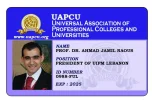
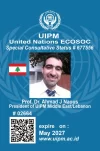
    Prof. Ahmad J. Naous is a prominent figure in Lebanon, but he is currently the President of UIPM Lebanon.

    • Accomplishments:
    • Renowned Lebanese economist, business strategist, educator, and humanitarian.
    • Founder of Stratexology, a ground-breaking approach to strategic planning.
    • Author and speaker on strategy and execution, with over 20 years of experience.
    • Earned several awards, including Member of Forbes Business Council and International Books for Peace Award.
    • Current roles:
    • CEO of UIPM
    • Professor at various universities.
    • Consultant and advisor to organizations on strategy and execution.
    While he is currently the President of UIPM Lebanon, he remains a highly respected and influential leader in the field of business and education in Lebanon.
    Joshua Ferdinand
    Joshua Ferdinand
    Welcome to Atomic Professor Naous! We look forward to reading your work :D
  • Loading…
  • Loading…
  • Loading…
Back
Top