


K.Hardwicke
Legacy Member
| Overview |
|---|
 This is an introductory lesson. Students get to know each other and start to experience the dynamics of the class by talking about their likes and dislikes. For the vocabulary, the teacher can select suitable words as they come up in the Noun Tennis activity, although some of the more difficult ones are in the key vocabulary. The assumption is that students can form the present simple- positives, negatives and questions, although the lesson revises these forms. The new language presented is: like + noun/gerund. The grammar is relatively easy, and the focus of the class is on communication and developing fluency. |
| Learning Objectives | Develop fluency. Improve fluency in the use of the Present Simple using verbs that express like/dislike. By the end of the class, students should be able to express their likes and dislikes using nouns and gerunds with the appropriate verbs. Students should increase vocabulary related to sport, pastimes and day-to-day activities. Build general fluency and confidence in spoken English |
| Success Criteria | Students will have achieved the above and will only be making a small number of functional errors. |
| CEFR Links |
|

| Resources and materials |
|---|
| Activity cards, whiteboard, whiteboard pen. |
| Key Vocabulary |
|---|
Vocabulary can be taken from the warm-up game of noun tennis and written on the board as words come up. Also, from the activity cards.
|
| WORD | CONCEPT CHECK QUESTIONS | _PHONOLOGY_ |
| Gardening (gerund) | What is it called when someone makes a garden? (a. When you like planting flowers in your garden.) | ?? /ˈɡɑː.dən.ɪŋ/ ?? /ˈɡɑːr.dən.ɪŋ/ |
| Board games (noun) | Draw a chess/checkers board on the board and mime the activity. Ask: Do you play board games with a ball? (a. No, not usually) Do you play them inside or outside? (a. Usually inside) | ?? /bɔːd/ ?? /bɔːrd/ |
| Sewing (gerund) | Mime a sewing action. Draw a needle and thread Ask: What is it called when you make clothes? | ?? /ˈsəʊ.ɪŋ/ ?? /ˈsoʊ.ɪŋ/ |
| Snakes (noun) | Draw a snake. Wriggle your arm and make a hissing sound. Ask: Are snakes long or short? (a. long) Is it good to pick snakes up? (a. No) | ???? /sneɪk |
| Skiing (gerund) | Mime skiing. Ask: What do you need for skiing? (a. Skis, snow, a mountain etc) | ???? /ˈskiː.ɪŋ/ |
Procedure
| Lead in / Warm Up / Introduction ( 15-20 minutes ) |
|---|
Noun Tennis
|
| Presentation / Teacher Model ( 15 minutes ) |
|---|
Presentation (15 mins)
I like swimming. Or I like chocolate cake.
Who likes swimming?
When they are producing correct sentences, show students the negative form. I don't like watching football. Or I don't like eggs.
n't is the contracted form of not* Elicit things that the learners don't like. You can also elicit things that the learners like using the vocabulary you have written on the board. Who doesn't like swimming?
When they are producing correct sentences, show students the closed or 'yes/no' question form Do you like watching tennis? or Do you like coffee?
Do you like cricket?
|
| Extension Task (10) |
|---|
|
Love, really like, enjoy, like, quite like, dislike/don't like, can't stand, hate.
|
| Plenary / Assessment ( 15 minutes ) |
|---|
| ? Memory Game Go around the class eliciting things students love/enjoy/can't stand/hate etc. You can also display emojis or images and let the students play in pairs or groups, saying what they like or don't like.  ??  ?????????????  ?????????⛸??⛷???️  ??   ???️????????????????  ????✈?  ??? Afterwards, see how many things students can remember and note down. |
| Problems that might occur | What I will do |
|---|---|
| Students may not use the 3-person singular form. | Ensure that this is error corrected even during the free practice activities. |
| Students may not remember vocabulary | Keep the 'Activity list' on the board and refer students to that whenever they get stuck |
| Grammar structures |
|---|
| Context / target language (marker sentence) Expressing likes and dislikes. |
| Grammar (Present Simple) We use the present simple to talk about things which are generally true.
|
What is important about the phonology of the language? |
|---|
The weak form of 'Do you' / d͡ʒ u:/ The most important aspect are: Falling intonation at the end of Closed or 'Yes/No' questions. And rising intonation at the end of Open or'WH' questions. |
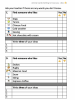
Whiteboard Preview
Do you like?
(end of lesson game)
Football/Soccer
?
Basketball
Basketball
?
Video Games
Video Games
Baseball
?
Tennis
Tennis
?
Rugby
Rugby
?
Frisbee
Frisbee
?
Pool
Pool
?
Table Tennis
Table Tennis
?
Badminton
Badminton
?
Fishing
Fishing
?
Circus
Circus
?
Painting
Painting
?[
Music
Music
?????????????⛸??⛷???️?????️????????????????✈????
There's lot's we could talk about
????????⛸??⛷???️?????️????????????????✈????There's lot's we could talk about