


HanaHarding
Legacy Member
| Overview |
|---|
| This lesson will encourage children to think about human impact on the environment and how this impacts animals. They will learn more about bees, why they are important and what they do for us. Students will also learn about the threats posed to bees. In mixed ability pairs, children will use the question templates below to research and find out more about the problem. This information, in a separate lesson, can then be used to present their findings to the class. This is a lesson that is focused on independent research and therefore requires access to a computer or relevant books. |
| Learning Objective |
|
| Success Criteria | • Can identify matter state, • Can describe properties without prompts. |
| UK Curriculum Links | Science
|
| US Curriculum Links / NGSS | LS2.A: Interdependent Relationships in Ecosystems
Designs can be conveyed through sketches, drawings, or physical models. These representations are useful in communicating ideas for a problem's solutions to other people. (secondary to 2-LS2-2) |
| Key Vocabulary |
|---|
| Habitat loss, pesticides, climate change, research |
Procedure
| Introduction ( 10 minutes ) |
|---|
| -Show the children the learning objectives and ask them what they already know about human impact on animals. Discuss their thoughts. - Hone this down to thinking about bees. What do they know about bees? Are they important? Are they endangered? Watch this BBC Bitesize clip about how important bees are for pollinating and food production. 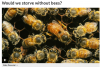 |
| Presentation / Teacher Model ( 5 minutes ) |
|---|
Introduce some new vocabulary. Write it into the board and what it means.
Explain that today they are going to be the researchers, and using the chrome books will be finding out more about key issues facing bees. - Show the children the powerpoint to recap how to research/ internet safety |

| Main Activities ( 25 minutes, although longer if needed) |
|---|
| Split the children into mixed ability pairs and ask them to collect a chrome book, or some information books. Give them a handout of one of the 3 topics to research 1a- researching climate change 1b- researching habitat loss 1c- researching pesticides Be available to help with research, check understanding and that they are finding the correct sources of information. |
| Extension Task |
|---|
| If the children finish they can begin to make a poster about their area of research to make people aware. |

| Resources and materials |
|---|
| Powerpoint presentation, computers/chrome books/information books. Pencils, worksheets, A4 paper for extension task. |
| References |
|---|
| Image on worksheets and powerpoint from Google Images |
| Worksheet/Handout Previews | ||
|---|---|---|
Worksheet 1a | Worksheet 1b | Worksheet 1c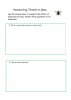 |
 Leaflet |

Attachments
-
1a researching- climate change.docx34.3 KB · Views: 226
-
1a researching- climate change.pdf55.6 KB · Views: 216
-
1b researching- habitat loss.docx34.6 KB · Views: 200
-
1b researching- habitat loss.pdf56.8 KB · Views: 219
-
1c researching- pesticides.docx34.3 KB · Views: 205
-
1c researching- pesticides.pdf56.1 KB · Views: 212
-
How to be a successful researcher.pptx168.2 KB · Views: 217
-
 1594381757783.png319.5 KB · Views: 353
 -
 Researching skills.PNG111.2 KB · Views: 133
 -
 worksheet 1a.PNG27.5 KB · Views: 141
 -
 worksheet 1b.PNG27.2 KB · Views: 198
 -
 worksheet 1c.PNG27.5 KB · Views: 140
 -
 1594382138756.png2.3 MB · Views: 176
 -
 1594718210406.png25.2 KB · Views: 129
 -
Leaflet.docx11.1 KB · Views: 179
-
 Leaflet.PNG14.9 KB · Views: 139