


K.Hardwicke
Legacy Member
| Overview |
|---|
| This is an introductory lesson that concentrates on communication. Students get to know each other and start to experience the dynamics of the class by talking about their experience. The assumption is that students can form questions and can uses most English tenses. The lesson is primarily a self- learning activity and students discover the new vocabulary which are adjectives to describe people. The focus of the class is on allowing students to find definitions for new vocabulary thereby helping them to remember the meaning. |
| Learning Objective | Aid self-learning. Develop fluency. By the end of the class, students should have learned 16 new adjectives to describe people. Build general fluency and confidence in spoken English |
| Success Criteria | Students will have achieved the above and will only be making a small number of functional errors. Students will be able to use most of the new words introduced as part of their active vocabulary and all in their passive vocabulary. Students will have improved their pronunciation and increased their awareness of word stress. . |
| CEFR Links | Can understand a wide range of demanding, longer texts, and recognise implicit meaning. Can express him/herself fluently and spontaneously without much obvious searching for expressions. Can use language flexibly and effectively for social, academic and professional purposes. Can produce clear, well-structured, detailed text on complex subjects, showing controlled use of organisational patterns, connectors and cohesive devices |

| Resources and materials |
|---|
| Pencil, pen, worksheet, whiteboard and vocabulary cards. |
| Key Vocabulary |
|---|
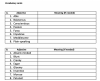
| Students find the definitions of the words. Phonology- Teacher checks students know the stressed syllable. Concept check after students have found the meanings. Before concept checking, put students into pairs and ask them to decide if the adjective has a positive, negative or neutral meaning. |
| LEXICAL ITEM & WORD CLASS | CONCEPT CHECK QUESTIONS | PHONOLOGY See high-lighted syllable |
| If a child will eat everything they are given are they fussy (a. No). If you are fussy do you want everything done in a very specific way? (a. Yes) | ???? /ˈfʌsi/ |
| Is a person who does things suddenly and without thinking about the effects impulsive? (a. Yes) | ???? /ɪmˈpʌlsɪv/ |
| Do meddlesome people allow others to behave how they want, or do they try to become involved in situations where their help isn't wanted? (a. they try to become involved in situations where their help isn't wanted) | ???? /ˈmedlsəm/ |
| Does a plain-speaking person say exactly what they mean or do they first try to be polite? (a. say exactly what they mean) | ???? /ˌpleɪn ˈspəʊkən/ |
| Has an absent-minded person got a good memory or are they always forgetting because they are not paying attention? (a. they are always forgetting because they are not paying attention) | ???? /ˌæbsənt ˈmaɪndɪd/ |
| Do blunt people say what they think without considering other people's feelings? (a. Yes) | ????/blʌnt/ |
| Are you cranky if you are easily annoyed or upset? (a. Yes) When do people feel/get cranky? (a. When they are hungry/tired/stressed/frustrated) | ???? /ˈkræŋki/ |
| Is an eager person always ready or really want to do something? (a. Yes). What are people eager to do? (a. go on holiday/please other people/find the result of something important) | ??/ˈiːɡə(r)/ ??/ˈiːɡər/ |
| If you are gloomy are you happy or unhappy? (a. unhappy) | ???? /ˈɡluːmi/ |
| What are you if you are good at thinking of new ideas? (a. inventive) | ???? /ɪnˈventɪv/ |
| Is a morose person happy and willing to smile? (a. No) When do people become morose? (a. When a relationship has ended/on Monday mornings/when they are tired) | ???? /məˈrəʊs/ |
| Is a petulant person easily upset? (a. Yes) Do they react to situations they dislike in a rude way, like a child? (a. Yes) | ???? /ˈpetʃələnt/ |
| If you can't do something because you don't have the strength or skill are you able? (a. No) If you possess the ability, what are you? (a. able) | ???? /ˈeɪbl/ |
| Is a boisterous person quiet? (No) Are they noisy and energetic? (a. Yes) What is usually more boisterous a puppy or a tortoise? (a. puppy) | ???? /ˈbɔɪstərəs/ |
| If you try to do your job well and you work hard are you conscientious? (a. Yes) Would you prefer to have a conscientious person working for you or someone who wasn't interested?... Why? | ?? /ˌkɒnʃiˈenʃəs/ ?? /ˌkɑːnʃˈenʃəs/ |
| If you give a direct answer to a question, are you evasive? (a. No) Which people have a reputation of being evasive? (a. politicians) Why are some people evasive? (a. Guilty/untruthful/shy/very sensitive) | ???? /ɪˈveɪsɪv/ |
Procedure
| Lead in / Warm Up / Introduction ( 30 minutes ) |
|---|
|
| Presentation / Teacher Model ( 15 minutes ) |
|---|
A hugely successful person.
She was a hugely successful person. * The following verbs can also precede an adjective: seem, become, feel, smell, taste Phonology- Check word stress and any problematic sounds that may arise |
| Main Activity (50-70 mins) |
|---|
Controlled/Scaffolded Practice (20 mins)
Are you bad-tempered?
Yes. Do you like to cooperate with people? No. Are you cantankerous? Yes!
Feedback (5-10 mins)
Free practice (30 mins) Tell me about a time. True or False?
|
| Extension Task |
|---|
|
| Plenary / Assessment ( 5 minutes ) |
|---|
Guess the Adjective
|
| Problems that might occur | What I will do |
|---|---|
| Students may forget or not use the target language. | Monitor to keep them on task. |
| Students may say they have finished too early. | Move students and create new pairings. Give more examples of what you want them to do. Use extension activities. |
| Worksheet/Handout Previews |
|---|